

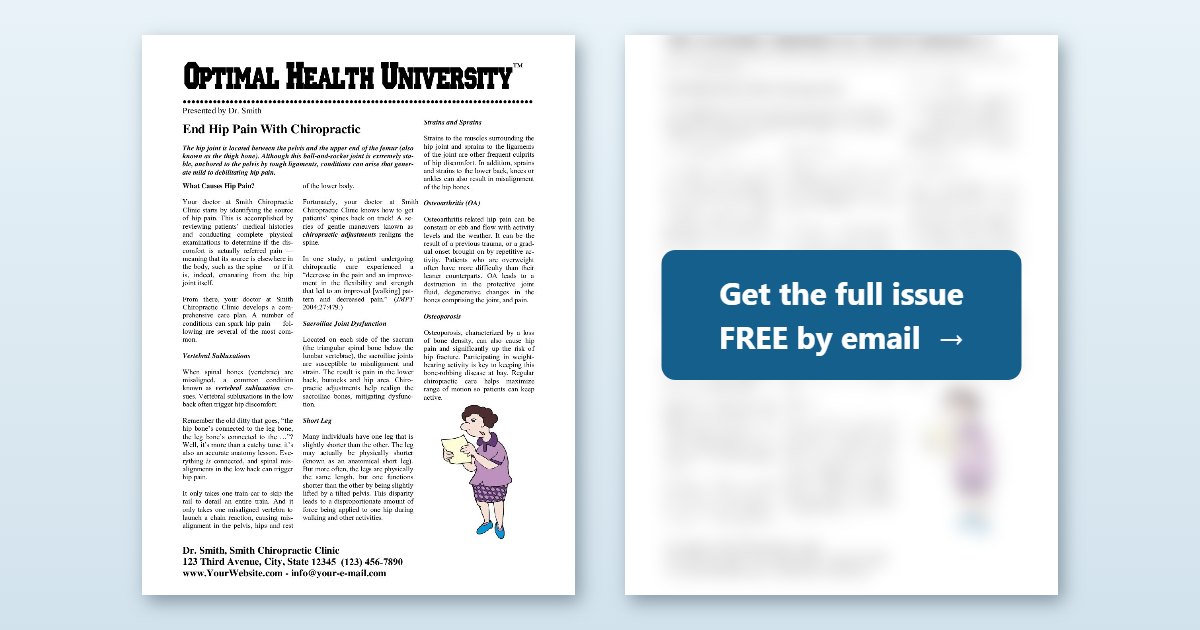
Hip pain is one of those complaints patients often live with for months before they mention it. Many assume it's "just age" or a sore muscle, and very few connect it to their lower back or pelvis. That gap is exactly what makes hip pain such a useful patient newsletter topic: it educates, it surprises, and it gives patients a clear reason to book a visit.
Here's what to cover, the research worth sharing, and how to put a hip pain newsletter to work in your clinic.
Why hip pain is a strong newsletter topic
- It affects almost everyone you see – desk workers, runners, weekend athletes, older adults and even children.
- Patients don't expect the answer. Most never connect hip discomfort with the low back, pelvis or the way they walk.
- It has a clear next step. "If this sounds like you, ask us about a gait and posture check" is an easy call to action.
What to explain to patients
The hip isn't always the source
The hip is a deep, stable ball-and-socket joint, yet pain felt there often starts elsewhere. A misalignment in the lower spine can set off a chain reaction through the pelvis and hips, so a thorough history and exam to find the true source – rather than simply treating the sore spot – is the first message to get across.
Sacroiliac joints and pelvic tilt
The sacroiliac joints, on either side of the sacrum, can become strained or misaligned and refer pain into the low back, buttocks and hip. Explaining this in plain language helps patients understand why their chiropractor may adjust the pelvis for "hip" pain.
A "short leg" that isn't really shorter
Many people have one leg that functions shorter than the other because the pelvis is slightly tilted, even though both legs are the same length. That small difference puts extra load on one hip with every step – a simple, memorable idea patients love to check for themselves.
Arthritis and bone health
Osteoarthritis can make hip pain come and go with activity and weather, and carrying extra weight tends to make it worse. Osteoporosis raises the risk of hip fracture. Encourage weight-bearing activity and remind patients that staying mobile is part of protecting their bones.
When to call right away
Two messages are worth repeating: any fall in an older family member should be checked promptly, and children with hip pain should always be evaluated, since causes at that age range from sports injuries to developmental hip problems.
Everyday tips patients can use today
- Move the wallet. Sitting on a back-pocket wallet tilts the pelvis. A front pocket or money clip is an easy fix.
- Choose supportive shoes. Good arch support and cushioning help keep the legs and hips aligned.
- Sit smarter. Long periods of sitting encourage low-back stiffness. A slightly reclined seat back with lumbar support reduces pressure on the lower spine.
- Stretch the hip flexors. Runners and anyone doing jumping or step exercise benefit from a regular stretching routine.
- Pay attention to walking. Flat feet, high arches and an uneven stride can all show up as hip pain – and a gait check can spot them.
Research you can reference
Patients and colleagues appreciate seeing that the advice is grounded in published research. Studies cited in our hip pain issue include:
- A chiropractic case report describing reduced hip pain and improved walking pattern with care (Journal of Manipulative and Physiological Therapeutics, 2004;27:479).
- Research linking prolonged sitting with low-back stiffness and pain (The Spine Journal, 2005;5:145–54).
- A review of seating design showing that a reclined seat back with lumbar support minimizes pressure on lumbar discs (JMPT, 1999;22:594–609).
- A review of causes of hip pain in younger patients (Clinical Orthopaedics and Related Research, 2004;418:9–17).
How to use this topic in your clinic
- Waiting room: print a stack for the front desk – hip pain is a topic people pick up and read.
- Email: send it to patients with a history of low-back, hip or knee complaints, especially those you haven't seen in a while.
- Social media: post the "short leg" or "wallet" tip with a one-line invitation to book a check.
- Pair it with an offer: a quick gait and posture screening turns a good read into an appointment.
- Time it well: spring running season and the new year, when people start exercising again, are ideal.
One well-chosen topic each week keeps your clinic in front of patients between visits – and that's what brings them back.
Quick hip pain tips for your patients
- Encourage patients to get up and move every 30–45 minutes instead of sitting for long stretches.
- Remind them to take the wallet out of the back pocket before sitting.
- Suggest supportive footwear and gentle hip-flexor stretches, and to book an assessment if hip pain lingers.
Weekly or monthly patient newsletter?
Should you send a patient newsletter weekly or monthly? A weekly newsletter keeps your clinic top of mind between visits, while a monthly newsletter suits busy offices that want a steady, low-effort rhythm. Either way, a hip pain issue like this one works well in your rotation. Send it in spring and January, when patients start new exercise routines, then share the key tips on your social media. With a full year of 52 ready-made issues, you can go weekly from day one, or send monthly and use the rest in your waiting room and on your website.
Send a patient newsletter every week – without writing a word
Get 52 evidence-based Chiropractic or Wellness newsletters, ready to personalize with your clinic name and contact details. Instant download in PDF and Word, one-time payment.
Buy both sets and save 10% at checkout.
0 Comments